Sunday, May 8, 2016

Project Blog 5/8/16 - Temperate Grasslands (The Great Plains)

https://upload.wikimedia.org/wikipedia/commons/6/62/Picketwire_Canyon.jpg

Summary

In this project, we had to research a biome and create a trifold as well as a model. The trifold and model both included information n your specific biome. My group was assigned the temperate grasslands. We decided to specifically research the Great Plains. The Great Plains are mainly located in Central America. However, a few other main temperate grasslands are located in Africa, South America, and Eurasia. The dominant plant is grasses. There are few to no trees in this biome. As for animals, there is very low diversity. Some common animals are bison and pronghorn. In the summer, temperate grasslands are very hot, in the winter, they are dry. The climate and weather there are very harsh and rough. Another interesting fact about temperate grasslands is that they have extremely fertile soil. In fact, it actually has some of the most fertile soil in the world. Unfortunately, due to the soil, a lot of the land is being taken over for farming leaving less room for actual wildlife. 

Backwards Looking - What process did you go through to produce this piece?

During this project, we had complete several steps. The first one being research. Our group spent about 1.5 weeks of research. Each group member was assigned a different area of research. The next step was organizing our research so we could print it and attach it to a board. When that was done, we printed it out and worked on our board. While a few people were working on the board, then the other members would work on our model. From there, we just finished each component for the project. 

Inward Looking - What did/do you find frustrating about this?

One thing I found frustrating was how my group never completely finished our model. We weren't able to create all plants to attach to our model. Another thing I found frustrating was how my group didn't always work as productively as we could have. For example, one person might not bring some certain material when they were supposed to. The final thing that made this project a bit harder to complete was the fact that one of my group members were often absent during that time. 

Outward Looking - In what ways did your work meet the standards for this assignment? In what ways did it not meet those standards?

In our trifold, our group met the standards for all the information required. We neatly typed it out, cut it and pasted it onto the board. The trifold was nicely completed. As for what didn't meet the standards, our model was missing a few key components. Though our model did resemble a temperate grassland biome, it did not include all the plants and animals mentioned on our board. It was missing many different plants. Both hazardous and edible.

Forward Looking - What would you change if you had the chance to do this piece over again?

If I had the chance to do this piece over again, I would set harder deadlines. That way, my group would be able to finish all parts of the project and meet all the standards. I would spend less time making the model or trifold look nice and more time working on the animals clay figures as well as plant figures. I would also use a more sturdy box for my diorama. Halfway through the project, our diorama snapped in half. We had to problem solve and fix the edges as well as redo our river.


Sunday, May 1, 2016

Weekly Blog 5/1/2016 - The Great Plains

http://d.fastcompany.net/multisite_files/coexist/imagecache/1280/poster/2013/05/1682173-poster-1280-bison.jpg

Summary

Temperate grasslands are located in many different places. A few of the main grasslands, however, are located in the United States, Africa, Australia, and Eurasia. The Great Plains is temperate grassland located in central North America. Within the Great Plains live many different animals such as bison, pronghorn, white tailed deer, and foxes. All of the animals in the plains have had to adapt to the weather, climate, and geography of the plains. For example, drought is a normal yearly occurrence even though it does not affect the wildlife too much. Many of the plants are able to live on. A majority of them are also available year round. There are also many rivers that pass through there like the Mississippi, Missouri, Republican, and Saskatchewan. Rain season is primarily during spring. The climate in the Great Plains is extremely diverse. Summer brings droughts or heavy rain, spring brings rain and thunderstorms, and winter brings thick blankets of snow.

SP2: Developing and using models

I developed models when I worked on creating a tri fold board to show the information my group and I had found. After researching, we worked on organizing our data. Our group also started planning out our diorama. We gave each other tasks to complete and materials to bring so we can all create a model. I used models when I looked at other models (whether in picture form or from other classmates) to help me figure out what my model might or should look like. It helped to have something you can reference to or get ideas from.

XCC: Stability and Change

The Great Plains changes as well as stays the same in many different ways year round. For example, one thing that stays the same is the population of bison year round in the Great Plains. Bison are one of the few animals that do not migrate during the winter. Other animals, however, do. One thing that is constantly changed is the weather and climate. As i mentioned earlier, the type of weather is constantly changing by season. Like the Bison, many plants stay year round in the plains. They have adapted to the harsh climates. 

Multiplier - Wanderer

This week I was a wanderer. I know his because I spent lots of y time finding resources for information and sharing them with my group. I also made a page full of correct citations to give credit too the websites we used. 


Thursday, April 14, 2016

A True Hero

The Journey of the Bottle


        12 years. It had been 12 years since he left. Iskander sat in the corner thinking about his son. 12 years ago, Wira, Iskander’s son, had left his father to join the army. Though Iskander had not heard from Wira since 2 years after he left, the fact that he lived in a poor secluded village had not prevented him from hearing about what a legend his son was becoming.  Wira was now a respectable soldier, a hero even. Just like his namesake. 8 years after Wira left, Iskander had sent out a scroll in a  bottle in hopes that it would reach his son.

     4 years after the bottle was thrown out to sea, in the present day, it was found by an old fisherman named Jamba, as he caught it in his net. Jamba opened the bottle and read the scroll inside, only to find that it was for none other than the hero Wira. Jamba set out to find Wira, though it was not all that hard, as Wira’s name was known far and wide. On his mini journey, Jamba encountered a marksman who had recently seen Wira, and so he took the bottle and set off. When the marksman found Wira, he was looking out to the ocean. The marksman tapped Wira’s shoulder as he dropped the bottle at his feet. He then left. A minute after the marksman left, Wira realized that someone had dropped something. Wira bent down and picked the bottle up. Wira opened the bottle. There were a few words on the outside of the note. They read: To my little hero. Wira, curious, unrolled the scroll. It read: My dear son Wira,”. A tear fell from his eyes as Wira realized that it was from his father. He read on. “If you are reading this, then this letter must have reached you. I don’t know how much time has passed, Please, come home. I have missed you greatly ever since you left, and worry for you every day.”  Since he left for the army, especially because of his growing popularity, Wira was unable to contact anyone, nor was he able to travel. In the first time since 12 years, he was finally permitted a break. After reading the scroll, Wira decided to set out and find his father. Alone, as he had no one else to travel with, he set off to the dock to rent a boat. Wira had no experience with boats, and so he had trouble picking one. While he was deciding on which boat he should take, he met up with a sailor. The sailor immediately recognized Wira as the Great Hero, and asked if he could be of assistance. Wira told the sailor about the bottle, his father, and everything else that had occurred in the past few hours, including his need for a boat. After hearing Wira’s story, the sailor offered to escort him. “It would be a great honor for me if you allow me to escort you,” the sailor said. Wira, grateful to the sailor, thanked him and accepted his offer. Realizing that he did not yet know the sailor’s name, he asked the sailors name. The sailor responded, saying that his name is Kusama. Kusama asked Wira where he would like to go, with Wira responding Indonesia. Based off of the currents in the route from Africa to Indonesia, Kusama chose a compatible boat. Wira asked Kusama how he knew which boat to take, to which Kusama replied that he based it off of the currents. Although Wira was well educated, he had not learned much about oceanography. Wira explained this to Kusama as he asked for an explanation of how currents work. And so, while they stocked the ship, Kusama explained that “Ocean Currents and driven by wind, salinity, density, and change in temperature.” Wira, still having a slight bit of trouble, said “Sorry to trouble you this much, but I still don’t understand it all that well. How does Wind, Salinity, Density, and Temperature change affect the currents? To this, Kusama replied “Salinity is amount of saltiness or dissolved salt in a body of water. Density is the measure of mass in something. Wind affects water because it moves the surface of the water. Temperature change affects currents because it causes the masses of different water areas to change.” Wira, now able to completely understand the topic, thanked Kusama, who replied that it was his honor. They finished stocking up on food and supplies, and set off on their journey. During their journey, Wira was responsible for the sails, while Kusama steered a boat. Several days later, they finally reached Indonesia. Wira’s father lived in a small village near the coast. The village was poor, as well as all of its residents. Iskander lived on the outskirts of the village, away from the other houses.

     Wira and Kusama walked to the village, as there was no form of transportation in that corner of the country. Once they reached the village, everyone greeted Wira with pride and joy, even preparing for a feast in the evening.  Kusama had departed, wanting to see more of Indonesia. Wira asked about his father, but no one knew much about him. According to the villagers, he barely ever showed up in the village. Not since 6 years after Wira left. Hearing this worried Wira greatly, and so he rushed to their house. Once they reached the house, Wira opened the door, only to find his father lying in bed, looking terribly ill. Wira asked his father what had happened, and he told Wira that he had fallen ill 6 years after Wira left. Wira, of course, ran to get help, coming back with the village medic. The medic checked on Iskander, and even identified his illness. The illness, unfortunately, had been seen before, but none of the victims had survived so far. There was no cure for this illness. Wira was devastated by the news. His father, whom he had not seen for the past 12 years, was on the verge of death. Wira was determined to save his father, and so, once again, he set out, seeking a cure. Wira asked around in all of Indonesia, but had no luck. Finally, just as he was about to give up, he ran into Kusama. Kusama saw the solemn look on Wira’s face and asked what was worrying him. Wira explained his father’s situation to Kusama, who asked to see his father.
     They had reached Wira’s home. Kusama began to ask the medic about Iskander’s conditions, recognizing the illness. Kusama spoke to Wira, and said that there was a cure for the illness back in Africa. And so, as quickly as possible, the two stocked up their ship once again, and traveled back to Africa, bringing along Iskander, as if they took the time to travel there and back, the condition would worsen to a truly incurable state. Several days later, they once again reached Africa. Wira stayed back on the boat along with his father while Kusama brought a medic who could cure the illness. Weeks later, after many times of taking medicine, Iskander was finally cured. Kusama and Wira left to Indonesia once again, and a feast was prepared in celebration of Iskander’s health and Wira’s homecoming.
     About a month later, suspicious people had come to the village looking for Wira. A new war had started, and without Wira, the army was sure to lose. It was a war between Africa and Britain. The agents of Britain had arrived on orders to assassinate Wira. In the dead of night, they set Wira’s house on fire. They woke up immediately, but as the house was made of straw, it was too late. The entire house was collapsing. Wira attempted to run out along with Kusama and Iskander, but he tripped. Just as a flaming chunk of ceiling fell upon Wira, Iskander pushed him out of the way, burning under the rubble. His last words were “Wira, Run!” Wira was shocked. He ran towards his father in a desperate attempt to save him, but Kusama pulled him away, as Iskander was already dead. They ran out together, surviving.
      In the following days, Wira had marched into battle and achieved victory. The same week, Iskander’s funeral was held. All of Africa and Indonesia was present. It was a funeral for not only Wira’s father, but also a hero. A hero who had died saving the Hero of the Land.


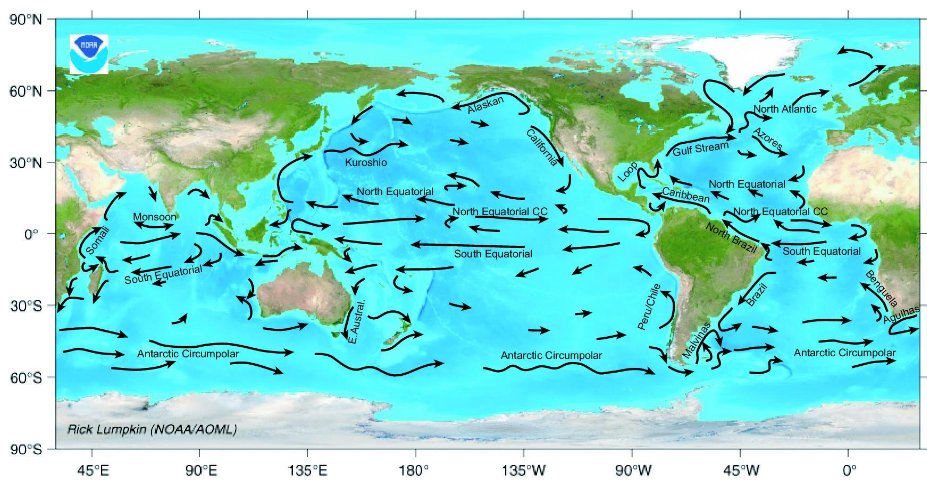


Sunday, April 10, 2016

Weekly Blog 4/10/16 - Ocean and Wind Currents

https://upload.wikimedia.org/wikipedia/commons/c/cc/Ocean_surface_currents.jpg

Summary

If you look at an ocean current map then compare it to a wind circulation map, you will find that the two look extremely similar. This is due to the fact that the two concepts affect each other. Wind, along with salinity, density, and temperature are all attributes that create and influence ocean currents. Wind, in particular, impacts the surface of the water. That will cause the ocean currents to travel in the same direction as the wind causing the two to look especially similar. One difference is that wind travels on both land and bodies of water while currents do not. In the northern hemisphere, currents travel clockwise. In the southern hemisphere, currents travel counter-clockwise. 

SP2: Developing and using models

During the course of the previous week, I developed and used models to illustrate the relationship between wind circulation and ocean currents. One model consisted of herbs floating in a container filled with water. Two people in each table used straws to blow towards the water in opposite directions. One blowing from the east, and another from the west. This created circular movements within the water. By watching, developing, and using the model, I was able to visualize and better understand why and how the concept worked. 

XCC - Cause and Effect

One cause and effect relationship I was able to identify is present in the stock market. Whenever a business  starts doing really well or really bad, the value of the companies shares changes. While the  value changes, people begin to sell and buy shares. The stock market is one gigantic example of a huge cause and effect relationship.

Multiplier

This week I believe that I was a mutant learner. This is because I continued to think of questions and find answers through analyzing models, graphs, tables, and maps. I was abe to gain knowledge through the different representations and worksheets I completed as well as saw.


Sunday, March 27, 2016

Weekly Blog 3/2716 - Ocean Currents

https://upload.wikimedia.org/wikipedia/commons/c/cc/Ocean_surface_currents.jpg

Summary

About 71% of the Earth's surface is covered in water. Most of this water is from oceans. Ocean currents are created by density in different bodies of water and wind. While the denser water sinks, the thinner water will rise creating a pattern.  In the northern hemisphere, ocean currents travel clockwise whereas, in the southern hemisphere, the currents travel count-clockwise. The earth rotates west (counter-clockwise) which affects the movement of the currents. Without the earth's rotation, the ocean currents would just travel in the direction towards the equator. Image opening a set of double doors, the right door is the northern hemisphere while the left door is the southern hemisphere. When you open them, the right door goes right (clockwise) while the left door swings in the opposite direction (counter-clockwise).

SP2: Developing and using models

I used models when I planned different routes across the world. My group and I looked a globe model of the world. The model helped us visualize the longest distance we would be able to cross without backtracking our steps on different continents as well as the ocean. I developed models when I drew my own map of the world on a paper. This was to study latitude and longitude lines. as well as geography to further understand the ocean and such. One thing I learned was that all the oceans on earth are connected. The Pacific, Atlantic, Indian etc. oceans aren't really separate oceans, they're parts of one huge body of water. 

XCC: Stability and Change

One thing I noticed is that over time the earth is constantly changing. Scientists believe that approximately 300 million years ago, all of our continents were connected in a sort of supercontinent called Pangaea. Over time, it started breaking apart making the earth we know now. However, one thing that constantly stayed the same is the fact that there is only one actual ocean. During Pangaea, There was one huge body of water (besides lakes, rivers, and etc.) All our oceans are technically still one big body of water.

What is the time scale for this system to remain stable or change?

The system of earth's changing geography takes a long time to change. The earth gradually shifts after earthquakes and such though it takes a veeerrryyy long time. If Pangaea was formed about 300 million years ago and it started breaking up 175 million years ago, that means Pangaea stayed the same slowly moving for 125 million years. As you can see, the geographical changing of the earth is a very slow process.

Multiplier - What type of learner were you this week?

This week I was a creator mutant. This is because I was studying the globes and communicating the information I found to my group. While some people in our group contributed to finding data, others analyzed the data together and wrote down our answer.


Monday, March 14, 2016

WAC - Who killed the fish in the Gray Bay?

3/14/2016
Dear Gray Times Editors,

          This letter will address fish kill problem going on in the Gray Bay. I am pleased to be able to tell you I have discovered the true culprit of the fish kill. Due to the knowledge I have gained over the past few weeks, I can now say for certain that the killer was in fact Golf Course owner.... SANDY TRAPP!! As you know, as of five years ago fish have been continuously dying off at a rate of a thousand per year. I have been conducting experiments and researching to find the cause of this problem. The data which I have received from the fish autopsies has confirmed my suspicions. Out of the 50 fish they tested, 21 were killed by insufficient amounts of oxygen in their waters. Sandy Trapp is responsible for this problem due to 3 important reasons. She has been asking her employees to add absurd amounts of water and fertilizer in the grass, fertilizer contains phosphates which cause chain reactions killing fish, and the fish autopsy proves that most of the fish died from oxygen loss .Now to explain what phosphates, fertilizer, and oxygen depletion have to do with each other.

          With the help of some special techniques, I have uncovered evidence proving that Sandy Trapp's Golf Course water drainage is full of phosphates. Our evidence came from a classified digital source. I found that Sandy Trapp and one of her employees have been found reasoning over the use of fertilizer and water. Sandy first spoke to concerning browning grass at the eighth hole. "It looks like some of the grass out by the eighth hole is turning a little brown. Let's step up the fertilizing and watering around here" he/she suggested. Please note, the employee has asked for his or her identity to remain confidential. Continuing on, the employee replied to Sandy telling her that the water was probably from a dog that slipped past security and peed on the grass. He/She told her the grass would return green naturally. The employee said, "We're already using more than enough fertilizer, and watering too much, in my opinion, I don't 't know where all that water goes". In other words, the employee respectfully declined Sandy's suggestion. This conversation ended with Sandy telling Anonymous that the grass must be kept green at ALL times. She told her employee to forget about the dog and just add more fertilizer and water. The use of the quotes above has been permitted. 

          Fertilizer contains phosphates which are killing fish in the Gray Bay. But how do phosphates kill fish? Well, fertilizer contains substances called phosphates which promote plant growth. By watering the grass too much, all the extra drainage will wash up into the nearby waters affecting plant life since phosphates are mixed in with the drainage. The phosphates will cause algal blooms. Algal blooms are large outbursts of algae plant life. Even with all the fish in the water, there will still be some algae left uneaten. The algae will rot attracting bacteria. The bacteria will eat the rotten algae and deplete the oxygen in the body of water. Without oxygen, fish can't breathe or survive ultimately killing them and decreasing their population. 

         Like I mentioned earlier, scientists have been conducting fish autopsies on different bodies from the Gray Bay. 14 of the fish died from oil-related reasons, 8 from chlorine, 7 from unknown and a whopping 21 from oxygen loss! Out of the 50 fish, 42% of them died. Let's connect some dots shall we? Hmmm, lots of fish are dying from oxygen depletion. Phosphates cause oxygen depletion. Sandy Trapp uses lots of fertilizer in her grass. Which by the way contains phosphates, the things that cause oxygen loss. Which did I mention, fish are dying from? See the connection between these three points yet? Anyway, this piece of evidence clearly states that Sandy has something to do with the death of those 21 (and counting) fish. In the fish autopsy, it stated in the report, " 21 of the fish had clamped fins which indicate that they died from not enough oxygen". Even with all this evidence, people can easily claim that the phosphates in the water aren't coming from them. Let's confirm once and for all that Sandy is for sure, in charge of this mass fish murder. 

          During an interview, Sandy told the reporters "The Golf Course is on the other side of the hill,
and our water doesn't even drain into the pond! Besides, we already know who's really guilty. It's the killer cow patties and the dirty sock juice from the laundry! ". This makes sense, at the cattle ranch they have to feed there coews with grass right? That menas they also use fertilizer. The phosphates could have easily been from them. Right? Wrong. Though phosphates from the cattle ranch makes sense, I have proof that it isn't from them. A team of scientists have conducted an experiment .
that tests the level of phosphates in certain water samples. They tested 3 different water samples, all of which were from possible suspects living around James Pond (the place where the phosphates are  coming from). By placing an indicator in the water sample, you are able to see if the water has high or ok levels of phosphates. If the sample changes color, then your water has too many phosphates. The only sample that changed color was the .... Golf Course. that proves that the phosphates are coming from Sandy. Also, if you remember correctly, during her chat with her employee, the employee talking about how she didn't know where their draiage went. If they didn't know where their water drained into, how did she know that it didn't drain into James Pond?  Time to review all of our newfound information.

          We know that Sandy Trapp puts excessive amount of fertilizer and water in her green grass. Fertilizer contains pohphates. A chemical that promotes plat growth leading to the death of fish. in the recent fish qutopsy, 21 out of 50 fish died from oxygen loss. Oxygen depletion claimed the lives of most fish tested. Sandy Trapp puts uses deadly fertilizer. Fish are dying due to phosphates and fertilizer in James Pond. The Golf Course is located right next to James Pond. Hmmm. Even better, our experiment shows the Golf Course is the only place near James Pond with too many phosphates in its drainage. All this evidence clearly points to how Sandy Trapp has been killing fish just by producing her green grass. One solution I suggest is to invest in artificial grass.. This way, the grass will always be green, they don't have to spend as much time taking care of it, Sandy wont have to hire people to water her grass, and she will save money by not having to buy fertilizer. Even their water bill will go down drarastically. Not only will artificial grass benefit the Golf Course in so many ways, it will also save the lives of fish in the Gray Bay.


Sunday, March 13, 2016

Weekly Blog 3/13/2016 - The Gray Bay

https://upload.wikimedia.org/wikipedia/commons/thumb/4/47/Water_pollution_fish_kill.jpg/1024px-Water_pollution_fish_kill.jpg

Summary

As of 5 years ago, fish in the Gray Bay have started to die off. This is due to several reasons such as chlorine, low pH levels, sediment, and phosphates in the water. Chlorine gives fish chemical burns. It will burn the fishes gills. The chlorine is let into the water by the water slide. One interesting fact is that the water slide opened up at the same time the fish started dying. The second contributor to the death of the fish is low pH levels. The lower the pH level, the more acidic the water is. Water with too much acid can prevent fish from reproducing as well as kill them. Acid rain is causing the acidity in the water. Phosphates causes things called algal blooms. With too much algae in the water, fish wont be able to consume it all so a lot of it will rot. The bacteria will then eat the rotten algae and multiply. With so much bacteria in the water, the germs will cause oxygen deprivation which will kill the fish. As you can see, the murder of all this fish in the Gray Bay is caused by many different factors.

SP3: Planning and carrying out investigations

I planned out investigations when I read different files about Phosphates. I had to read these files so I could understand the meaning of my data that I collected from the experiment I was about to do. I carried out an investigation when I conducted experiments to find the culprit of the Gray Bay fish kill with my table group. In this phosphate investigation, we measured the phosphate levels in water drainage from the Gold Course, Small Town, and Cattle Ranch. We found that the place where the phosphates in the James Pond water was coming from was the Golf Course. 

XCC - Cause and Effect

One cause and effect relationship I noticed during class was the chain of events that occurred in the gold course leaving phosphates in James Pond. The events started with a dog. When the dog started peeing on the grass in the golf course, the green grass turned brown. Because of this, the owner of the golf course, Sandy Trap ordered her employee Mo Lawn to add more fertilizer and water to the over watered and fertilizered grass. After that, Mo Lawn did as she was told. However, that caused the excess water to drain into Jame Pond. Since fertilizer contains phosphates, an algal bloom occurred in the Pond creating lots of algae. At first, the algae will increase the population of fish. Even with lots of fish, they wont be able to eat all of the algae so the algae will rot. Like I described earlier, bacteria will come and so on. As you can see, by peeing on the grass, the dog has apparently killed several fish. This example of cause and effect is extremely long.

Explain how this relationship helps you "take over the world" - Habits of mind (extra credit)

This relationship demonstrates how small actions can lead to big problems. It teaches me that whenever a do work, I should always be careful and pay attention to even the smallest details to make sure everything is right. When you are ignorant to problems, it may lead to harder problems. Another thing I learned was that I when I solve problems, I need to think of the effect it will have on everyone. For example, Sandy Trap did solve her browning grass problem. The bad part is that she caused another problem by acting hastily. You won't be able to take over the world if you don't pay attention to everything and think about something before you do it.

Multiplier - What type of learner were you this week?

This week, I think I was a creator mutant. This is because I contributed to the class discussions and review of what we are learning about in the beginning of every class period.