Friday, August 26, 2016

Cell Wars 8/26/16

https://upload.wikimedia.org/wikipedia/commons/thumb/d/d8/Plant_cell_structure-en.svg/1280px-Plant_cell_structure-en.svg.png

Summary

The Cell Theory is made up of three parts. One, all living things are made up of cells. Two, Cells are the most basic form of living things. And three, all cells come from cells. You know something is living if it respires, needs nutrition, grows, and reproduces. Cells are made out of things called atoms. They make up everything in the whole entire universe. Inside cells are things called organelles such as the nucleus, mitochondria, chloroplast, and the vacuole. The organelles present in plant and animals cells however, vary. Our bodies have trillions of cells.

SP6: Constructing explanations and designing solutions

I constructed explanations with my classmates when I participated in a class discussion on cells. We tried to figure out what makes something alive. I also constructed explanations and designed solutions when I worked on solving a worksheet and finding the odd one out in a list. I had to work together with my table group and look for patterns in order to find which item listed was the odd one out. After I found it, I explained to the class which item I thought was odd and explain why I knew.

Cross Cutting Concepts: Patterns

When solving the worksheet given out in class. I had to look out fro patterns and similarities between the listed items. I also have to try to figure out what differences they each had in order to find the odd one out. Based on my knowledge that all living things have cells, I was able to find the odd one out by asking myself which items were considered living and which weren't. Scientists Mat Thias Schleiden and Theodore Scwann both were able to come up with the fact that all living things have cells by noticing a re-occurring pattern in their studies. All plants and animals have cells. This was how they were able to come up with part of the cell theory.

Multiplier

This week I was a creator because I contributed to the class discussion and answers the question of my classmates.


Sunday, May 22, 2016

Weekly Blog 5/22/16 - Nutrition

https://upload.wikimedia.org/wikipedia/commons/thumb/e/eb/MyPyramidFood.svg/2000px-MyPyramidFood.svg.png

Summary

In order to stay healthy, people have created food guides like food pyramids (shown above), percentage food plates, graphs, and more. A healthy balance of different food categories is essential for leading a strong life. You can learn about the foods you are eating by reading the nutrition label. The nutrition label includes some information such as a number of servings and calories. Speaking of calories, what are they? Calories are a unit of measurement. They measure the amount of energy the food may give you. One calorie is equivalent the amount of energy required to heat up 1 kilogram of water 1 degrees celsius. Also, there are two kinds of calories. Big and small. A big Calorie (with a capital C) is 1000 small calories.

SP4: Analyzing and interpreting data

I analyzed data when I watched videos and read articles about food nutrition, labels, serving sizes, and more. Once I did this, I created graphs and wrote about the data I had just learned with my group. Our class created a document together showing data we all knew. We each had to work together to list healthy and unhealthy foods.

XCC: Energy and Matter

We discussed energy when we talked about calories. Calories measure the potential amount of energy some food will provide when consumed. Food is one of the things that give humans energy. Unlike plants, we can't photosynthesize and create our own food. A small chain of a events or system happens when we consume food. After we eat food, our body takes the available nutrition from the food to create energy. After that, we can use the energy to do whatever.

Multiplier: Learner

This week I was a learned. I asked questions about food serving sizes to learn more as well as get answers. I was able to get answers by reading articles, watching films, and listening to my classmates.


Sunday, May 15, 2016

Weekly Blog 5/15 - The Food System

https://i.ytimg.com/vi/v24wT16OU2w/maxresdefault.jpg

Summary

Within the world, there is a food system. A system is something made up of several components that work together to complete one or multiple tasks. In the food system, there are the people that make the food, prepare the food, sell the food, eat the food, throw away the food, etc. It's like a chain of events that lead up to two possibilities. In order for the store to be able to sell the food, the food has to have been grown and transported previously. If any steps were taken out of the system (or chain of events) everything would be different. Once the food gets to the eating stage, then it can either be thrown into landfills and the garbage, or used into a different way (composting, feeding others, etc.). 

SP6: Constructing explanations and designing solutions

This week I constructed explanations when I organized a list including the steps food goes through. I had to think about the order and why that order would make sense. I also had to explain how food might get wasted during that step. I designed solutions when I created a poster about the strawberries. Once, we ran out of room for writing, as a solution, our group adjusted the papers and made more room for our words. 

XCC: Systems

Like I mentioned earlier, we have a food system which includes several steps leading up to the disposal of food. Though the order of steps can vary depending on the type of food, a general outline my be ordered as production (growing), harvesting, sorting (throwing away bad and keeping the good ones), washing, packaging, transportation, retailing, home storage, cooking, eating, and disposal. All steps and components are dependent on each other. If one step was taken out, the whole food system would change. For example, if we didn't throw away "ugly" foods while sorting, a lot less food would be wasted. America would have much less food waste. This completely changes the outcome of the system.

Multiplier: Initiator

This week I was an initiator. While we were working on our food systems poster wth our group, I was asking questions about the strawberries and the process. I asked questions like, "Would this happen because of this? What do you think?".


Sunday, May 8, 2016

Project Blog 5/8/16 - Temperate Grasslands (The Great Plains)

https://upload.wikimedia.org/wikipedia/commons/6/62/Picketwire_Canyon.jpg

Summary

In this project, we had to research a biome and create a trifold as well as a model. The trifold and model both included information n your specific biome. My group was assigned the temperate grasslands. We decided to specifically research the Great Plains. The Great Plains are mainly located in Central America. However, a few other main temperate grasslands are located in Africa, South America, and Eurasia. The dominant plant is grasses. There are few to no trees in this biome. As for animals, there is very low diversity. Some common animals are bison and pronghorn. In the summer, temperate grasslands are very hot, in the winter, they are dry. The climate and weather there are very harsh and rough. Another interesting fact about temperate grasslands is that they have extremely fertile soil. In fact, it actually has some of the most fertile soil in the world. Unfortunately, due to the soil, a lot of the land is being taken over for farming leaving less room for actual wildlife. 

Backwards Looking - What process did you go through to produce this piece?

During this project, we had complete several steps. The first one being research. Our group spent about 1.5 weeks of research. Each group member was assigned a different area of research. The next step was organizing our research so we could print it and attach it to a board. When that was done, we printed it out and worked on our board. While a few people were working on the board, then the other members would work on our model. From there, we just finished each component for the project. 

Inward Looking - What did/do you find frustrating about this?

One thing I found frustrating was how my group never completely finished our model. We weren't able to create all plants to attach to our model. Another thing I found frustrating was how my group didn't always work as productively as we could have. For example, one person might not bring some certain material when they were supposed to. The final thing that made this project a bit harder to complete was the fact that one of my group members were often absent during that time. 

Outward Looking - In what ways did your work meet the standards for this assignment? In what ways did it not meet those standards?

In our trifold, our group met the standards for all the information required. We neatly typed it out, cut it and pasted it onto the board. The trifold was nicely completed. As for what didn't meet the standards, our model was missing a few key components. Though our model did resemble a temperate grassland biome, it did not include all the plants and animals mentioned on our board. It was missing many different plants. Both hazardous and edible.

Forward Looking - What would you change if you had the chance to do this piece over again?

If I had the chance to do this piece over again, I would set harder deadlines. That way, my group would be able to finish all parts of the project and meet all the standards. I would spend less time making the model or trifold look nice and more time working on the animals clay figures as well as plant figures. I would also use a more sturdy box for my diorama. Halfway through the project, our diorama snapped in half. We had to problem solve and fix the edges as well as redo our river.


Sunday, May 1, 2016

Weekly Blog 5/1/2016 - The Great Plains

http://d.fastcompany.net/multisite_files/coexist/imagecache/1280/poster/2013/05/1682173-poster-1280-bison.jpg

Summary

Temperate grasslands are located in many different places. A few of the main grasslands, however, are located in the United States, Africa, Australia, and Eurasia. The Great Plains is temperate grassland located in central North America. Within the Great Plains live many different animals such as bison, pronghorn, white tailed deer, and foxes. All of the animals in the plains have had to adapt to the weather, climate, and geography of the plains. For example, drought is a normal yearly occurrence even though it does not affect the wildlife too much. Many of the plants are able to live on. A majority of them are also available year round. There are also many rivers that pass through there like the Mississippi, Missouri, Republican, and Saskatchewan. Rain season is primarily during spring. The climate in the Great Plains is extremely diverse. Summer brings droughts or heavy rain, spring brings rain and thunderstorms, and winter brings thick blankets of snow.

SP2: Developing and using models

I developed models when I worked on creating a tri fold board to show the information my group and I had found. After researching, we worked on organizing our data. Our group also started planning out our diorama. We gave each other tasks to complete and materials to bring so we can all create a model. I used models when I looked at other models (whether in picture form or from other classmates) to help me figure out what my model might or should look like. It helped to have something you can reference to or get ideas from.

XCC: Stability and Change

The Great Plains changes as well as stays the same in many different ways year round. For example, one thing that stays the same is the population of bison year round in the Great Plains. Bison are one of the few animals that do not migrate during the winter. Other animals, however, do. One thing that is constantly changed is the weather and climate. As i mentioned earlier, the type of weather is constantly changing by season. Like the Bison, many plants stay year round in the plains. They have adapted to the harsh climates. 

Multiplier - Wanderer

This week I was a wanderer. I know his because I spent lots of y time finding resources for information and sharing them with my group. I also made a page full of correct citations to give credit too the websites we used. 


Thursday, April 14, 2016

A True Hero

The Journey of the Bottle


        12 years. It had been 12 years since he left. Iskander sat in the corner thinking about his son. 12 years ago, Wira, Iskander’s son, had left his father to join the army. Though Iskander had not heard from Wira since 2 years after he left, the fact that he lived in a poor secluded village had not prevented him from hearing about what a legend his son was becoming.  Wira was now a respectable soldier, a hero even. Just like his namesake. 8 years after Wira left, Iskander had sent out a scroll in a  bottle in hopes that it would reach his son.

     4 years after the bottle was thrown out to sea, in the present day, it was found by an old fisherman named Jamba, as he caught it in his net. Jamba opened the bottle and read the scroll inside, only to find that it was for none other than the hero Wira. Jamba set out to find Wira, though it was not all that hard, as Wira’s name was known far and wide. On his mini journey, Jamba encountered a marksman who had recently seen Wira, and so he took the bottle and set off. When the marksman found Wira, he was looking out to the ocean. The marksman tapped Wira’s shoulder as he dropped the bottle at his feet. He then left. A minute after the marksman left, Wira realized that someone had dropped something. Wira bent down and picked the bottle up. Wira opened the bottle. There were a few words on the outside of the note. They read: To my little hero. Wira, curious, unrolled the scroll. It read: My dear son Wira,”. A tear fell from his eyes as Wira realized that it was from his father. He read on. “If you are reading this, then this letter must have reached you. I don’t know how much time has passed, Please, come home. I have missed you greatly ever since you left, and worry for you every day.”  Since he left for the army, especially because of his growing popularity, Wira was unable to contact anyone, nor was he able to travel. In the first time since 12 years, he was finally permitted a break. After reading the scroll, Wira decided to set out and find his father. Alone, as he had no one else to travel with, he set off to the dock to rent a boat. Wira had no experience with boats, and so he had trouble picking one. While he was deciding on which boat he should take, he met up with a sailor. The sailor immediately recognized Wira as the Great Hero, and asked if he could be of assistance. Wira told the sailor about the bottle, his father, and everything else that had occurred in the past few hours, including his need for a boat. After hearing Wira’s story, the sailor offered to escort him. “It would be a great honor for me if you allow me to escort you,” the sailor said. Wira, grateful to the sailor, thanked him and accepted his offer. Realizing that he did not yet know the sailor’s name, he asked the sailors name. The sailor responded, saying that his name is Kusama. Kusama asked Wira where he would like to go, with Wira responding Indonesia. Based off of the currents in the route from Africa to Indonesia, Kusama chose a compatible boat. Wira asked Kusama how he knew which boat to take, to which Kusama replied that he based it off of the currents. Although Wira was well educated, he had not learned much about oceanography. Wira explained this to Kusama as he asked for an explanation of how currents work. And so, while they stocked the ship, Kusama explained that “Ocean Currents and driven by wind, salinity, density, and change in temperature.” Wira, still having a slight bit of trouble, said “Sorry to trouble you this much, but I still don’t understand it all that well. How does Wind, Salinity, Density, and Temperature change affect the currents? To this, Kusama replied “Salinity is amount of saltiness or dissolved salt in a body of water. Density is the measure of mass in something. Wind affects water because it moves the surface of the water. Temperature change affects currents because it causes the masses of different water areas to change.” Wira, now able to completely understand the topic, thanked Kusama, who replied that it was his honor. They finished stocking up on food and supplies, and set off on their journey. During their journey, Wira was responsible for the sails, while Kusama steered a boat. Several days later, they finally reached Indonesia. Wira’s father lived in a small village near the coast. The village was poor, as well as all of its residents. Iskander lived on the outskirts of the village, away from the other houses.

     Wira and Kusama walked to the village, as there was no form of transportation in that corner of the country. Once they reached the village, everyone greeted Wira with pride and joy, even preparing for a feast in the evening.  Kusama had departed, wanting to see more of Indonesia. Wira asked about his father, but no one knew much about him. According to the villagers, he barely ever showed up in the village. Not since 6 years after Wira left. Hearing this worried Wira greatly, and so he rushed to their house. Once they reached the house, Wira opened the door, only to find his father lying in bed, looking terribly ill. Wira asked his father what had happened, and he told Wira that he had fallen ill 6 years after Wira left. Wira, of course, ran to get help, coming back with the village medic. The medic checked on Iskander, and even identified his illness. The illness, unfortunately, had been seen before, but none of the victims had survived so far. There was no cure for this illness. Wira was devastated by the news. His father, whom he had not seen for the past 12 years, was on the verge of death. Wira was determined to save his father, and so, once again, he set out, seeking a cure. Wira asked around in all of Indonesia, but had no luck. Finally, just as he was about to give up, he ran into Kusama. Kusama saw the solemn look on Wira’s face and asked what was worrying him. Wira explained his father’s situation to Kusama, who asked to see his father.
     They had reached Wira’s home. Kusama began to ask the medic about Iskander’s conditions, recognizing the illness. Kusama spoke to Wira, and said that there was a cure for the illness back in Africa. And so, as quickly as possible, the two stocked up their ship once again, and traveled back to Africa, bringing along Iskander, as if they took the time to travel there and back, the condition would worsen to a truly incurable state. Several days later, they once again reached Africa. Wira stayed back on the boat along with his father while Kusama brought a medic who could cure the illness. Weeks later, after many times of taking medicine, Iskander was finally cured. Kusama and Wira left to Indonesia once again, and a feast was prepared in celebration of Iskander’s health and Wira’s homecoming.
     About a month later, suspicious people had come to the village looking for Wira. A new war had started, and without Wira, the army was sure to lose. It was a war between Africa and Britain. The agents of Britain had arrived on orders to assassinate Wira. In the dead of night, they set Wira’s house on fire. They woke up immediately, but as the house was made of straw, it was too late. The entire house was collapsing. Wira attempted to run out along with Kusama and Iskander, but he tripped. Just as a flaming chunk of ceiling fell upon Wira, Iskander pushed him out of the way, burning under the rubble. His last words were “Wira, Run!” Wira was shocked. He ran towards his father in a desperate attempt to save him, but Kusama pulled him away, as Iskander was already dead. They ran out together, surviving.
      In the following days, Wira had marched into battle and achieved victory. The same week, Iskander’s funeral was held. All of Africa and Indonesia was present. It was a funeral for not only Wira’s father, but also a hero. A hero who had died saving the Hero of the Land.




Sunday, April 10, 2016

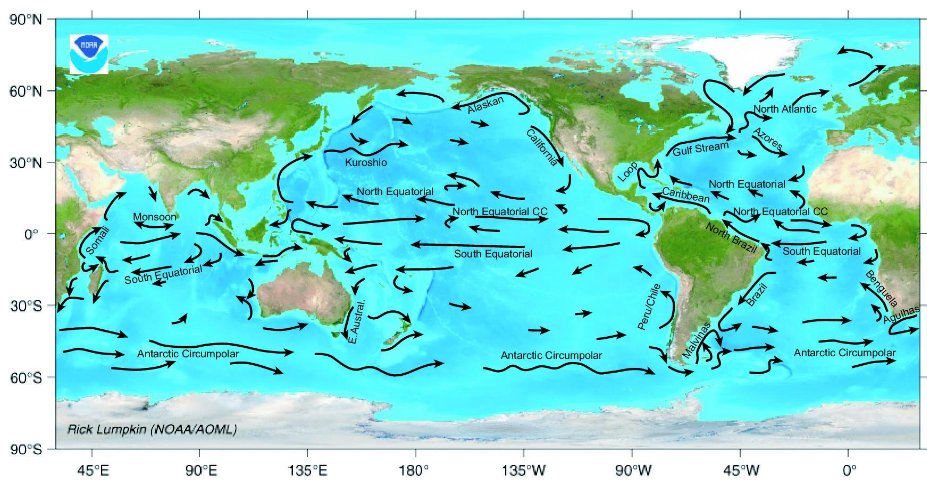
Weekly Blog 4/10/16 - Ocean and Wind Currents

https://upload.wikimedia.org/wikipedia/commons/c/cc/Ocean_surface_currents.jpg

Summary

If you look at an ocean current map then compare it to a wind circulation map, you will find that the two look extremely similar. This is due to the fact that the two concepts affect each other. Wind, along with salinity, density, and temperature are all attributes that create and influence ocean currents. Wind, in particular, impacts the surface of the water. That will cause the ocean currents to travel in the same direction as the wind causing the two to look especially similar. One difference is that wind travels on both land and bodies of water while currents do not. In the northern hemisphere, currents travel clockwise. In the southern hemisphere, currents travel counter-clockwise. 

SP2: Developing and using models

During the course of the previous week, I developed and used models to illustrate the relationship between wind circulation and ocean currents. One model consisted of herbs floating in a container filled with water. Two people in each table used straws to blow towards the water in opposite directions. One blowing from the east, and another from the west. This created circular movements within the water. By watching, developing, and using the model, I was able to visualize and better understand why and how the concept worked. 

XCC - Cause and Effect

One cause and effect relationship I was able to identify is present in the stock market. Whenever a business  starts doing really well or really bad, the value of the companies shares changes. While the  value changes, people begin to sell and buy shares. The stock market is one gigantic example of a huge cause and effect relationship.

Multiplier

This week I believe that I was a mutant learner. This is because I continued to think of questions and find answers through analyzing models, graphs, tables, and maps. I was abe to gain knowledge through the different representations and worksheets I completed as well as saw.