Friday, March 24, 2017

Weekly Blog 3/24/17 - The Periodic Table

https://upload.wikimedia.org/wikipedia/commons/thumb/3/39/Periodic_table_large.png/1280px-Periodic_table_large.png

Summary

The periodic table organizes the elements by atomic weight and similar properties. The first version of the periodic table was created by Dmitri Mendeleev. On the right of the periodic staircase (the green stair like line on the right side of the table), there are the non-metals. On the left side, there is the metals. A period is a row in the table, a family is a column. Elements share similar properties and are grouped together within the family. They have the same amount of electrons on the outer layer of the atom. This is what gives them similar properties. In order from left to right, first there are the alkaline metals, they have 1 electron in the outer shell and are highly reactive. Next, there are the alkaline earth metals which have 2 electron in the outer shell. They are less reactive than the alkaline metals but still reactive. Third is the transition metals. These are all of the elements in between the towers on both sides, they are good conductors. Then, there's the Boron family which has 3 electrons in the outer shell. After that there is the nitrogen family, which has 5 electrons. Next is the oxygen family and then the halogens. Lastly, there is the noble gases with a complete set of 8 electrons sin the outer shells. Due to that, they don't react with anything.


SP6: Constructing explanations and designing solutions

This week I constructed explanations on why the periodic table is organized the way it is by looking at things like how many electrons elements have on their outer shell as well as what properties they have and what their atomic numbers are. By looking at patterns in different atoms I was able to learn about the relationship between elements in families and how they have similar properties. I learned that the periodic table is organized by atomic number as well as properties in the element. 


XCC: Structure and Function

The function or properties of an atom or element is very dependent on its structure. For one, the amount of protons in an element is what defines the atom. If you added just one proton to an atom, you would have a 
completely different element. In addition to that the amount of electrons will also affect the atom. If you take away or add an electron the charge of the atom will change.


Friday, March 17, 2017

Atoms, Elements, and Ions

https://upload.wikimedia.org/wikipedia/commons/d/d8/Atom_diagram.png

Summary

Atoms are the basic building blocks of matter. They can't be broken down further without maintaining their function and properties. They are made of protons, electrons, and neutrons. Protons have a positive charge, electrons a negative, and neutrons neutral. The protons and neutrons live in the nucleus of the atom while the electrons orbit around the neutron. They are also defined by the number of protons they have. Elements are pure substances made from only one type of atom. They are all on the periodic table. Ions are atoms that have either lost or gained electrons. There are two types, cations, and anions. Cations are ions that have lost electrons. Because they lost negatively charged elections, they have a positive charge. Anions are ions that have gained electrons. This means they have a negative charge. You can figure of the charge of an ion by subtracting the number of electrons from the number of protons.


SP5: Using mathematics and computational thinking

Over the course of the week, I used mathematics to calculate the density, volume, and mass of different objects. For example, while solving the density dilemma, we had to calculate the densities of 5 different crowns using division. We were given the information on each crowns volume and mass. Since density (how much stuff there is in a given space), is calculated by dividing m by volume we were able to use math the find the densities. Then we had to compare the densities of the crowns to the densities of other materials to figure out what each material was made out of.


XCC: Structure and Function

The structure, (density and buoyancy) determines its ability to float or sink. In class, we tested different objects to see if they would float or sink. If an object has a higher density than water, it will sink. If it has less mass or a lower density, it will float. Whether or not an object float doesn't have to do with its material, weight, or volume. For example, you could have two cubes with the same volume. But one is made out of stone while the other one is wood. The wooden block might float while the stone block will probably sink.


Sunday, March 12, 2017

Endangered Species - Project Blog 3/12/17

The Infographic We Created

Summary

In this project, we choose an endangered species, created an infographic on the animal, and developed a protection plan for our animal. The animal we choose is the blind velvet worm. The blind velvet worm has a soft, velvety which can measure from 25 - 35 mm and if you couldn't tell from the name, it has no eyes. They also have two antennae as well as two small appendages on either side of their mouths. They use those to hunt their prey. Due to their blindness, they are super sensitive to air currents caused by movement. This is what allows them to figure out what's going on around them. They can be found in Tasmania's eucalyptus forests. The reason why they are endangered is mainly due to deforestation (loss of habitat) and sometimes wildfires. One way we can save the blind velvet worms is by creating laws and rules protecting te small area of habitat that the blind velvet worm is known to live in. This will give them and home and reserved space to live.


Backwards Looking - What process did you go through to produce this piece?

The first step was to choose an endangered animal. We did this by going on a website with a list of endangered animals and clicking on the worm tab. We choose the blind velvet worm since its name sounded interesting. The next step was research. Each group members was assigned a different role and were in charge of a different piece of research. After our research was finished we created the infographic on the left with information about all of our research. The last step was to worm on a presentation and come up with a conservation plan.


Inwards Looking - What was especially satisfying to you about either the process or the finished product?

One thing that was especially satisfying to me about the infographic was that it has lots of information. To communicate the information we also used a variety of media including a video, pictures, and text. In addition to this, our infographic looks visually appealing.


Outward Looking - If someone else were looking at the piece, what might they learn about who you are?

If someone else were looking at my piece they might learn that I like to make sure the work that I make is very neat, easy to read and nice to look at. I do this by making sure the background or text color doesn't make it hard to read and by adding in lots of visuals and pictures. 


Forward Looking - What would you change if you had a chance to do this piece over again?

If I had a chance to do this project over again, then I would choose a different endangered animal to do this project on. This is because it was really hard to find information on our animal due to the fact that very little research has been done on the blind velvet worm. What helped us was finding information on the velvet worm and seeing if it applied to the blind velvet worm also since the two animals had very similar traits.


Sunday, March 5, 2017

Interactions Between Organisms - Weekly Blog 3/5/17

https://upload.wikimedia.org/wikipedia/commons/c/c4/Anthidium_February_2008-1.jpg
An Example of Mutualism

Summary

In nature, there are many different types of relationships between organisms. Some nice, some not so nice. Predation is a win lose interaction. It is when one organism consumes a lot of or all of another. An example of predation is a when a lion hunts or kills a zebra for food. Competition is when organisms are competing for resources such as food, light, water, shelter, mates and more. There are 3 kinds of symbiotic relationships. A symbiotic relationship is one between organisms of different species where the survival of one is dependent of the survival of the other. The first one is mutualism. Mutualism is a win win interaction where both species get something good out of it. An example of mutualism is shown in the picture above.
The second one is commensalism which is a win ehh interaction. When one organism is benefitted while the other is neither harmed nor benefited. The last one is paratism which is a win lose interaction. It is when one organism is benefited (a smaller species) and the other is harmed (a larger species). The difference between predation and paratism is that in predation the organism being harmed is killed or eaten whereas in paratism the outcome would be less extreme.

SP1: Asking questions and defining problems

I asked a question and defined problems when I completed research about the type of habitat my groups chosen endangered species, the blind velvet worm. I researched about where it lives and what, might be happening to the ecosystem that is causing their endangerment. The point of my research was to gather background information to be able to answer why that species is endangered and how we can prevent it from becoming extinct and getting it off the endangerment list. 


XCC: Cause and Effect

During the past week I worked on finding the cause of the blind velvet worms endangerment. The effect is the endangerment of the blind velvet worm. The main cause is the clearing of the worms habitat, dry eucalyptus forests. A decrease in population of the blind velvet worm will also become the cause of more and more things leading to more and more effects. 


Sunday, February 19, 2017

Weekly Blog 2/17/17 Inter-Dependence of Organisms

https://upload.wikimedia.org/wikipedia/commons/3/3d/%D0%95%D0%BA%D0%BE%D0%BB%D0
%BE%D0%B3%D0%B8%D1%87%D0%BD%D0%BE_%D1%80%D0%
B0%D0%B2%D0%BD%D0%BE%D0%B2%D0%B5%D1%81%D0%B8%D0%B53.jpg

Summary

An ecosystem is a community of living and non-living organisms which interact with each other. Living organisms are biotic while non-living parts of an ecosystem are abiotic. One way biotic organisms are dependent on abiotic factors is how animals need oxygen to survive. Animals are biotic and oxygen is abiotic. An example of how biotic organisms rely on other biotic organisms is in an ecosystem's food web. When the population on one creature drops, increases or gets diseased than all organisms part of the web are affected since everything is somehow connected.


SP3: Planning and Carrying out Investigations

I planned and carried out an investigation when I used a Gizmos simulator to experiment with how populations and health of organisms might affect the other organisms in the food chain. I did this by changing populations and the health (normal or diseased) of rabbits, grass, snakes and/or hawks. After watching a graph of the populations of each organism over a certain period of time, I recorded my data. After that, I studied my data and thought about why the organisms were affected the way they were.


XCC: Cause and Effect

In an ecosystem food chain, all of the organisms are dependent on one another. If something changes with one organism, then all of the other orgnisms in the ecosystem will be affected since everything is connect whether directly or thorugh another organism. For example, imagine a simple food chain with grass as the producer, then rabbits that eat the grass, snakes that eat the rabbits, and hawks that eat the snakes. If out of nowhere the snake population drastically increased. Several things would happen. During the first few months, the rabbit population would increase causing the grass population to decrease while the haw population would also decrease. However, overtime eveyrthing will most likelt balance out eventually or somehow work out.


Thursday, February 9, 2017

Project Blog - Super Genetics

A poster of all the components of my project

Summary

Genes are made of DNA or deoxyribonucleic acid. A genotype is a pair of alleles or forms of a trait. n addition to all this, traits can be either dominant (represented by uppercase letters) or recessive (lowercase). Genotypes can be either heterozygous (hybird) or homozygrous (purebred). A phenotype is an observable trait resulting from someone's genotype. You inherit half of your traits from your mom and half from your dad. To predict traits, scientists use punnett square. Punnett squares help scientists make predictions about genotypes. In addition to this, some traits or characteristics you might have might be a result of epigenetics. Epigenetics is how the decisions your mother (from the moment you are in her stomach) and you make will affect you later on in your life. For example, if you smoke while pregnant, the effect will more than likely be that your child is born too early as well as underweight. You can also genetically engineer genes. On common technique is by inserting a new gene into a plasmid or loop of bacterial DNA. First, the loop of DNA is cut with a restriction enzyme. It scans for the base letter sequence GAATC, as it runs along the double helix. Once it finds it, at that exact point it cuts the loop of DNA leaving the ends of the loop sticky. This allows a new piece of DNA to be inserted. After the new strand of DNA gets inserted, the joins are stitched together by another enzyme called DNA ligase. Once you finish all these steps you now have a loop of genetically modified bacteria. In our project we had to create a superhero, villain, and child using genetics and learning about it while we did so.


Backwards Looking - How much did you know about this topic before you started?

Before we started our whole genetics unit, I didn't know much about genetics. Only that we get our genes from both of our parents and that genes determine our traits which includes how we look, what genetic diseases we might develop, and some personalities or ways we act. I also knew about genetic engineering and mutations (that genetic engineering existed). Most of what I know about genetics now is new knowledge.


Inwards Looking - What was especially satisfying to you about the product?

I especially liked how all my drawings turned out in this project. I think the extra week that was given at the end to complete everything and put it all together really gave me time to refine all the work I did and make sure it was the best. I used that time to go over a lot of my drawings with a pen and color it more. I also fixed and re-read a lot of my writing.


Outward Looking - If someone else were looking at the piece, what might they learn about who you are?

If someone were to look at my project, they would learn that I really enjoy keeping things organized as well as pretty and enjoyable to look at. I spent a lot of time on the villains packet writing, drawing, and coloring, for example. I also made sure that the tape was neatly and evenly cut. They might also learn that I love food since a lot of the stories I wrote for this project revolved around food.


Forward Looking - What's one goal you would like to set for yourself for next time?

Next time, I would like to set more firm checkpoints while I do my work. This will keep me on track as well as make sure I don't have to rush at the end like I did for a bit on this project. I will do this by thinking of exactly what I want to accomplish by the end of that class period or day. If I don't make my goal, I will need to work extra hard after school, or the next day to catch up on my work.

Sunday, February 5, 2017

Weekly Blog 2/5/17 - Genetics

https://upload.wikimedia.org/wikipedia/commons/thumb/e/e2/Eukaryote_DNA-en.svg/320px-Eukaryote_DNA-en.svg.png

Summary

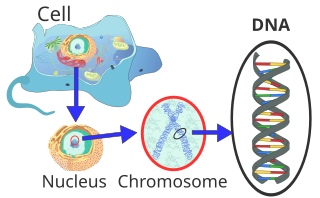
In human cells, there are 23 pairs of chromosomes meaning 46 chromosomes total. People get 23 from one parent and the other 23 from another. Chromosomes can be found in the nucleus of cells. They are made of DNA, or deoxyribonucleic acid, which is the instructions for making us. Segments of DNA is called genes. Your traits, come from your genes. Genes can also be modified. Lots of foods are actually genetically modified, they are known as GMO (genetically modified organisms). 


SP2 Developing and Using Models

I developed a model this week when I created and tweaked my superhero automata. I also developed a model when I worked on my super villain nefarious papers. I had to draw four models about the original and nefarious of different body systems and organs. In addition to drawing these models, I wrote a short paragraph about the function of the normal and nefarious, how it changes from one to another, and more. In addition to this, I started creating a giant model with all of the information and papers from this superhero unit and began assembling it into one poster.


XCC: Structure and Function

The structure of the eye in my supervillain is what gives it is supervision or ability to see (well). Compared to a normal eye, the structure of the nefarious eye includes a larger lens to allow more light into the retina as well as a thicker retina. A thicker retina means more photoreceptors which will improve my supervillains vision. Photoreceptors are the cells that actually allow us to see everything around us including the shapes of objects and color. This idea was based off cats eyes. Cats amazing vision comes from their larger number of photoreceptors. They have around 6 times more than humans do.