Sunday, January 28, 2018

Weekly Blog 1/28/18 - Newtons Laws of Motion

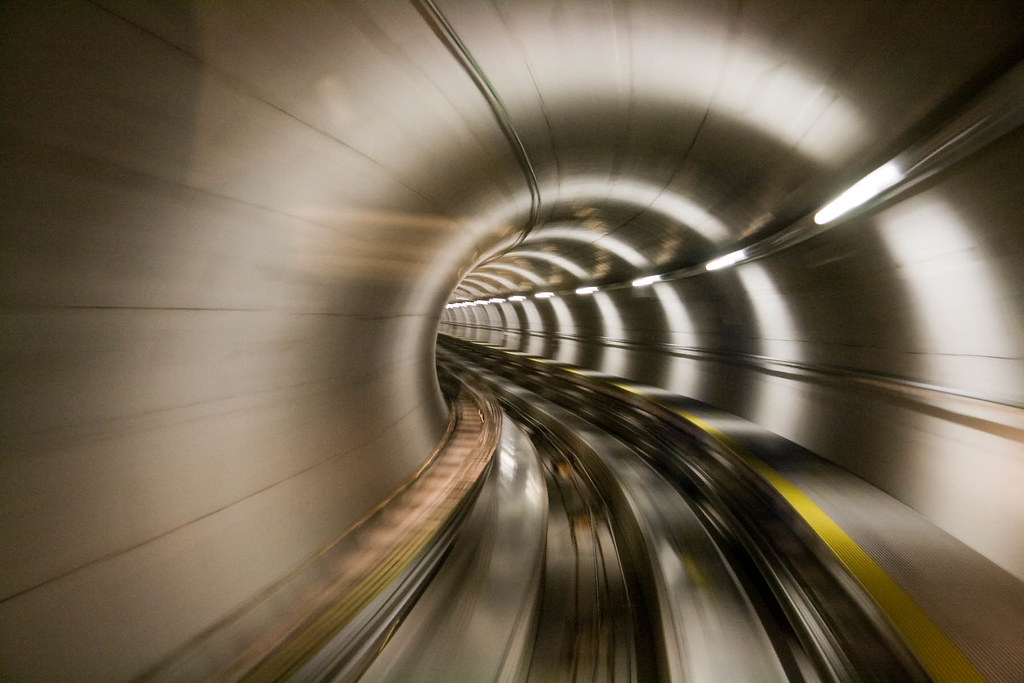
7507679046_9ec84d534a_b.jpg

Summary 

Newton's first law of motion is the law of inertia. This law states that an object with no force applied to it will never move and when force is applied to an object, it will stay in motion as long as no outside forces cause it to stop. Newton' second law states that force is equal to mass x acceleration (f = ma). But what exactly is acceleration? Acceleration is when you are either speeding up, slowing down, or changing direction. This means that even if you are just standing still and turning in a circle, you are still accelerating. Newton's third law states that for every action there is an equal and opposite reaction. 


SP 5: Using Mathematics and Computational Thinking

While conducting several experiments on finding the speed and velocity of different cars I had to use lots of math. For example, to calculate the velocity of one of the cars I had to use certain mathematical skills like division and addition to find averages. Using the formula speed = distance/time, I was able to calculate the speed and velocity of all of the cars. Once I had completed that portion of the experiment and collect all of my data in tables I created line graphs to represent my data. 


XCC: Cause and Effect

All of Newton's laws of motion have to do with cause and effect. For example, the law of inertia states how you need to apply a certain amount of force to an object in order to get it moving. This is cause and effect. One way to think about it is if you are biking. On a mountain or road bike, you can shift gears to control the amount of force needed to pedal making you go faster or slower. When you are on a low gear, it takes more force to pedal and set the bike in motion because there is more weight against you. The cause is the force you apply against the pedals and the effect is the motion and movement of the wheels. In addition to this, Newtons third law of motion is also all about cause and effect. In Newton's third law, every action has an equal opposite reaction, the action is the cause while the reaction is the effect.

Sunday, January 21, 2018

Weekly Blog 1/21/18 - Speed

https://encrypted-tbn0.gstatic.com/images?q=tbn:ANd9GcR3aeI69P0_NR5f129JxrUxKDCdOzUHtKE2Rr-
VwIZbc9MZ8RTh


Summary

The formula for finding speed is distance/time. In other words, speed is simply how fast you are going. It is a scalar quantity meaning it only measures magnitude. An example of speed is 31 mph. Velocity, on the other hand, measures speed with direction. It is a vector quantity. Knowing the velocity of objects is very important. We use our knowledge of speed and direction in our everyday life like when you are in a car, turning and driving around the road when you are crossing the street, and more. To keep track of speed and velocity, you can represent them in a graph. You can do this with either a distance-time graph or a speed-time graph.


S&EP 3 - Planning and Carrying Out Investigations

I planned and carried out an investigation when I completed a lab testing out and comparing the speeds of three different cars on a ramp. I first had to identify the controlled variables on a worksheet such as the height of the ramp, material of the ramp, slope, and the length of the track. The variable being manipulated was the car since we took turns sending different cars down the ramp to test their speeds. Once we set up the ramp, I made my hypothesis. My hypothesis was that the green car would travel the fastest and take the least amount of time to get to the end since it was the heaviest. After testing and timing all of the cars and recording my data on a chart, I found that my hypothesis was correct.


XCC: Structure and Function

To record your data and represent motion, you can create a distance-time graph. The function for a distance-time graph would obviously be distance/time which will give you speed. These graphs help you see how long it took for an object to travel a certain distance. The structure of these graphs are the distance plotted on the y-axis and time on the x-axis. It is really important to get the structure of the graph down and the axis' marked and written correctly. For example, if you recorded speed on the y-axis instead of distance on the y-axis the function of the graph would completely change. Now, the graph tells you how fast an object is moving for how long. That would be a speed graph.


Sunday, January 14, 2018

Weekly Blog 1/14/18 - Speed, Motion, and Velocity

https://c1.staticflickr.com/4/3184/2495892146_af8b878200_b.jpg

Summary

Scalar quantities only measure the magnitude of objects while vector quantities measure both the magnitude and direction. An example of a scalar quantity would be a distance while a vector quantity would be displacement. People often get distance and displacement confused. Distance is the total amount of distance you traveled/moved while displacement is the amount of distance between your start and end point. Another example of scalar vs vector quantities would be speed and velocity. Speed is a scalar quantity while velocity is a vector. In addition to all of this, regarding motion, to determine whether or not something is in motion you use reference points. A reference point is an object used in comparison to another object to determine whether or not that object is in motion.

SP2: Developing and Using Models

I developed and used models to determine and represent the distance and displacement of objects. By using simple math and sometimes the pythagorean theorem, I was able to draw models on graph paper and in formative that represented the direction and distance objects traveled. The models helped me visualize the movement of the object by creating a visual representation of the object's distance and displacement. I also used models when I analyzed and learned about distance over time graphs. I used the graphs to visualize and see the speed an object, distance traveled, and time spent traveling. 


XCC: Stabillity and Change

In distance over time graphs, you are able to observe when the speed of the object is stable, and when it is changing. You can observe this by looking at the slope of the line. When the object is moving at a steady pace, the line will be linear or straight. The higher the slope, the faster the object is moving. In a formative, I analyzed the movement of Tom by looking at a graph and determining the stability and change within his speed and travel distance. The graph was able to tell me how fast he was moving, how long it took him, how far he traveled in what direction, and when he was stable or not.


Wednesday, December 20, 2017

Project Blog - Charity Fair 2017


Summary

The charity my group choose to support and present about is called the American Foundation for Suicide Prevention. AFSP works funds research, raises awareness, advocates to pass laws that will save lives as well as offers support. Every year over 1, 000,000 people in the U.S attempt suicide with over 44,000 succeeding. To support our charity, my group sold black milk tea and peach tea inside a glass mason jar. Each of the jars were covered in glitter, decorated with the blue and purple suicide awareness ribbon and included a tag with more information on our charity. In total, we made $211 dollars by selling out of our 50 jars.


Backwards - In what ways have you gotten better at this kind of work?

Compared to my prior year's charity fair, I definitely improved. For one, this year my group and I completed every aspect of the charity fair in a timely manner. Unlike last year, I wasn't staying up the night before finishing up my board with my group. I also think the product that I created turned out better. The milk tea sold out fast and we got many compliments on our board and presentation. I also made over $100 compared to last year.


Inwards - What was especially satisfying to you about either the process or the finished product?

One thing especially satisfying about the finished product was how our presentation during the charity fair went. I think our group did a really great job. We really took into account what feedback we got during our practice presentations in class and practiced a lot. After the presentation, I felt really proud of how we did. There was no stuttering, we had all our lines memorized, and many people in the audience were touched and emotional when watching us present. Our presentation to the parents was one of the best presentations that I have ever given during my 4 years at AdVenture.

Outwards

What the one thing you particularly want people to notice when they look at your work?
One thing I particularly want people to notice when they look at my work is the effort we put into decorating our jars. Each jar is brushed with multiple layers of gold glitter ,lined with a different colored ribbon based on the flavor of drink and wrapped around with a hand drawn tag. It took us an especially long time to make the tags because on each one we had to untie the already made know (which took awhile for all of them), put on a bell, and retie it an appropriate length for the jar.


Forwards
One thing I would like to improve upon is ...

One thing I would like to improve upon is thinking more ahead before we do things considering our product. Doing this would have saved us a lot of time. This is because when we put the glitter on the jars, we didn't anticipate how much time it would take. We spent many hours layers glitter on all of our 50 jars. In the future, if I wanted to do a half sparkle look for a jar, I could have just used spray paint. If we spray painted the jar, it would have saved us many hours of work giving us time to make other parts of our project and board better.

Tuesday, December 12, 2017

WAC - Should We Bring Back Extinct Species 12/14/17


     “When a species goes extinct, that’s the end. Those genes are gone. That job in the ecosystem is gone. That niche disappears so there is nothing left to serve that purpose.” 10:15, Reawakening Extinct Species. For hundreds of thousands of years, this was the reality we lived in. However, due to our recent explosion of knowledge, circumstances have changed. Scientists are currently exploring the possibilities of resurrecting extinct species with something called de-extinction. Even more, with the variety of de-extinction methods such as cloning, selective breeding, and genome editing, bringing back our long lost friends seems more a part of reality than fiction. But that poses the question, is it worth it to go through the trouble of bring back extinct species? The answer is yes, we should bring back extinct species. Why? Because the practice of de-extinction can actually help with conservation, has environmental benefits, and will expand of our scientific knowledge and understanding. The benefits of de-extinction vastly outweigh the consequences.

     Some people may argue that de-extinction is time and money wasted; time and money that should be going to the conservation of endangered species. However, most don't realize that the technology used to bring back extinct species can also be used to repopulate and help endangered species. By using de-extinction technology to repopulate endangered species, we can diversify gene pools with little variation. According to the SENCER article, Should We Bring Back Extinct Species?, diversifying the gene pools will leave populations "less susceptible to viruses, bacterial infections and disease"(para. 2). This is due to natural selection. When an organism with genetic variations that will increase it's chance of survival arises, natural selection will ensure that that trait is passed down as the species evolves. As the SENCER stated, these variations can be immensely beneficial to endangered species. In addition to this, de-extinction has even more conversational benefits. Ben Novak, a lead researcher from Revive & Restore, a non-profit working to save endangered and extinct species with engineering and science has some thoughts on this topic. He stated in Stephen Ying's article, We Might Soon Resurrect Extinct Species. Is It Worth the Cost?, “living species are endangered partly because of 'the lack of an ecological partner or some link in the food web.'"(para. 9). This means that de-extinction can be used as a means of conservation just as easily as it is used for resurrection.

     De extinction also has environmental benefits. One scientists named Sergey Zimov is working to bring back the woolly mammoth by splicing the DNA of similar species with something called crisper to create a hybrid species similar to the woolly mammoths. By repopulating the tundra with the woolly mammoth, we can "encourage the revival of ancient grasslands, which could slow the rate of melting permafrost and, therefore, reduce carbon emissions.”(para. 3), as stated in the Should We Bring Back Extinct Species? article. Sergey Zimov believes we can reduce the temperature by at least 20 degrees. In other words, he is saying that bringing back the woolly mammoth will reduce the rate of global warming through the reduction of carbon emissions. But the woolly mammoth isn't the only extinct animal that carries environmental benefits. In the New York times article, We Might Soon Resurrect Extinct Species. Is It Worth the Cost?, Ying also mentions how passenger pigeons will counteract the negative affects of deforestation. When the Eastern deciduous forests were filled with thousands of passenger pigeons, the large flocks would land on the tree and break the branches "excreting layers of rich fertilizer that allowed new trees to grow" (para. 19). This job belonged exclusively to the passenger pigeons. Without them, the once rich forest soil has become poor. These are only two of the many ways that extinct species can better our environment.

     Because of humans, so many amazing and unique species died out to extinction. De-extinction can undo the damage we caused in the past in a positive way and bring back more diversity of life. In addition to this, if we bring back species with amazing abilities that went extinct, scientists can further our knowledge of the world and make breakthroughs that will benefit humanity. For example, Michael Archer, an australian researcher is working to bring back the gastric brooding frog. The sighting of this unique species was the first time anyone had ever seen an organism that could change one organ into another. The medical world was excited about the frogs discovery, but before they could learn anything new the species soon went extinct. In the article, Reawakening Extinct Species, Gabriela Quiros stated that scientists" wondered, could they use this in human health, not to have babies in our stomachs but to manage gastric secretions in the gut?”(para. 9). Imagine how much we could learn from extinct species. By being able to examine living organisms from the past, we can also learn about their ecosystems and the reason behind their extinction "filling in some gaps in evolutionary theory"(para. 2, SENCER article). With de-extinction we have a chance to learn about things we couldn't learn before.

      As I have shown, we should bring back extinct species. De-extinction can help us conserve our endangered species while bringing back extinct ones, benefit and improve our environment, and teach us things about the world they we never could have learned before. Our world has so much to gain from bringing back extinct species. And though we may not have our own Jurassic park anytime soon, thanks to the science of de-extinction you can bet on seeing some old friends in the near future.

Sunday, December 10, 2017

De Extinction - Weekly Blog 12/10/17

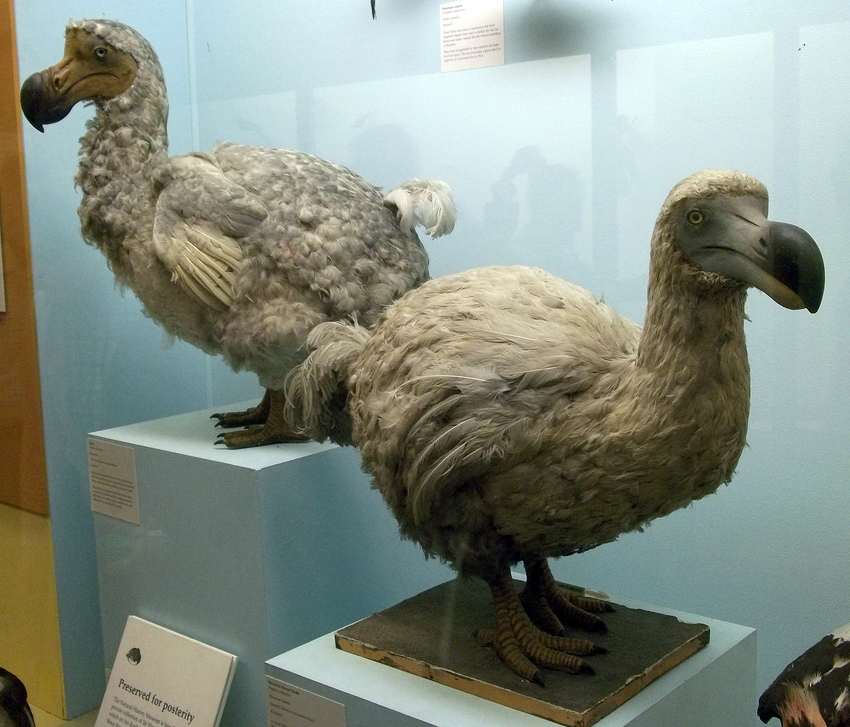
https://upload.wikimedia.org/wikipedia/commons/3/3c/NHM_Dodos.jpg

Summary

Friday, December 1, 2017

Weekly Blog 12/3/17 - Carbon Footprint


Summary

Air pollution is caused mostly by the transportation of goods. Almost all of the items we own are manufactured in other countries. To get from retailers to us products have to shipped around the world creating an insane amount of pollution. Out of trains, trucks, boats, and cars, airplanes release the most grams of CO2 per kilogram per mile. In order to keep our planet fresh and prevent things like global warming, we need to be aware of how much pollution products create and act of that knowledge. Buying your favourite products locally can make a huge difference over time. You can start by visiting local farmers markets to purchase your everyday groceries. In addition to reducing the amount of CO2 produced in the air, you will also be treating yourself to fresh and higher quality ingredients.

SP2 Developing and Using Models

I developed models when I created a map of my charity fair products journey with google maps. My map kept track of all the CO2 released into the air to make my product by showing how each component was shipped from its manufacturer, to retailer, to me. I used this model to see approximately how many total grams of CO2 per kilogram per mile was emitted into the air during the creation of my product. By knowing this information, I was able to see just how much air pollution one jar of milk tea could release. My model explained to and showed me that when creating future products and buying items, I need to keep in mind how much air pollution is being created. 


XCC: Scale Proportion and Quantity

 When calculating the quantity of grams of CO2 per kilogram per mile the total amount of CO2 emitted depends on the amount of miles traveled and the type of vehicle. For airplanes, 1 mile of travel would be equivalent to 0.17 grams of CO2, 2 miles would be 0.34, and 5 miles would be 0.85. The relationship between miles and CO2 is a scale proportion. In order to calculate the quantity of CO2, you have to first determine what kind of vehicle the items was shipped by. If it was in the same country, it was shipped by a truck, if it was in the same continent, train. If it was in a different continent, airplane or boat. After that, multiply the amount of miles traveled by the amount of grams of CO2 produced per mile.