Thursday, March 22, 2018

Digital Vs Analog WAC 3/21/18


     Since the 80's and especially now, digital recording technology has been overtaking and dominating the music industry leaving analog recordings in the dust. However, recently many people have been arguing the benefits of analog sound recording. According to the article Analog, Digital, What's the Difference? by Recording Connection, "analog sound tends to be warmer, has more texture and is thought to capture a truer representation of the actual sound."(para. 9). Digital, however, is described as "somewhat cold, technical and perhaps lacking in analog’s nuance."(para. 9). But which format of sound recording is better for me as a recording artist? Though both analog and digital recording formats have their pros and cons, I should record my music in a digital format. This is due to the fact that digital recording formats are cheaper, easier to work with, and more accessible to everyone.

     If we decided to record in analog format, editing would be a tedious and difficult task for you, the producer and the studio. Analog tapes are hard to edit and worst of all, there is no undo button. One mistake and the recording will be ruined and we will have to start all over. In addition to this, tape hissing and static background noises that often comes with analog recordings are nearly impossible to fully get rid of. With digital formats, however, getting rid of background noise can be as easy as the click of a few buttons. "You can chop, edit and manipulate audio within a matter of minutes"(para.4), says Charmain2010 in his article Analogue VS Digital: Advantages VS Disadvantages. Overall, when it comes to easier editing in the studio, digital recording definitely wins.

     There are also more benefits to digital recording than just editing. In addition to that, digital recording equipment also requires less maintenance and is cheaper. To create an analog recording, you would need a whole studio full of expensive and bulky equipment. For digital, however, you could create a whole soundtrack at home on your laptop. Also, in Chris Woodford's article Analog and Digital, he writes "You'll need several shelves to store 400 vinyl, analog LP records, but with an MP3 player you can put the same amount of music in your pocket!".

     Another important factor that will determine my success as an artist is how widely distributed and available to the public my music is. We live in a digital age where everyone can connect and discover new things online through the internet. The biggest way to get my name and songs out in the world for the public to discover is through online social media sites like YouTube and Spotify. In addition to this, we could upload and sell our music online in places like I tunes. If we sold analogue records, listeners would be limited to those owning and interested in analog record players. We should take advantage of the many music sharing platforms online available to us and record in a digital format.

     A common argument that is often brought up in favor of analog recordings is that they simply sound better and are of better quality. Steve Guttenburg wrote in his article, Why does Analog Sound Better than Digital?,"Music isn't a test tone or just a sequence of numbers. It's about soul, and when the music's good, it's supposed to connect with people...Analog-sourced music does that stuff better than digital"(para. 4). In reality, however this is incorrect. In the video created by PastVid, Analog or Digital (1993) it mentioned that "It takes a good stereo with a good turntable to hear the subtleties that CD's seem to miss"(2:16). The difference between the two are so slight, it doesn't really matter whether or not you are listening to an analog or digital recording since they sound the same. In addition to this, static and hissing background noise is commonly found in analog recordings and they degrade over time. Unlike with analog where the more you listen to an analog recording the worse the quality gets, digital CD's or files sound exactly the same every time you play it. 

     So which one do you think is the better option now? Digital recordings are efficient, cheap, highly distributive, durable, and basically sound as good as analog recordings. Analog recordings can be expensive, consume time and space to make, degrade over time, and more. Not to mention how little people own analog record players nowadays. It is obvious that I should record my music in a digital format because of digital's many pros.


Sunday, March 11, 2018

Weekly Blog 3/11/18 - Analog and Digital Sounds

Digital-and-Analog-Wave.jpg.

Summary 

Analog technology is any kind of non digital tool that is used to create an "analogy" of what it is measuring or doing. For example, in a clock the hands are representing time. This doesn't mean that the clock is time but rather that the clock is creating an analogy of time. Digital technology, however, is different. Unlike analog technology, digital technology takes the information, then converts it into numbers to store or display. Digital technology is generally faster and easier to read than analog technology. Also, more information can be stored in less space using numbers and digital technology that with analog. However, this doesn't exactly mean that digital technology is better. While it may be more efficient, many argue that digital technology is sacrificing quality for convienience. In the image above, you can see the difference between an analog and digital recording. In the digital recording, lots of information is lost. However, you can improve the quality of a digital recording by increasing the sampling rate which is basically recording more heights out of more points on the original recording.

SP 4: Analyzing and Interpreting Data

I analyzed data when I created two graphs of digital recordings based on the same analog recording at different sampling rates. Comparing the graphs side by side showed me the how good the quality of an analog recording is compared to a digital one. However, when analyzing my graphs I found that the more points I collect or the higher the sampling rate, the less information will be lost on the digital recording. This reminded me of how taking a picture on a good camera with higher resolution compares to one on an old, bad camera. Just like digital recordings with more numbers and data, images with higher resolution and more pixels are better quality than ones with less. 

XCC: Struction and Function

Sounds travels differently through different mediums because of their structure. When molecules are closer together, it allows sound to travel faster because the sound vibrations and energy can move without losing and having to use any energy. Sound slowly through the air, faster in liquids, and even faster through solids. On a cold day, molecules will contract and come closer together allowing sound to travel faster. The structure and formation of molecules in all of these different mediums cause  sound vibrations to travel through and function differently when encountered. 


Wednesday, March 7, 2018

Quizizz! Re-grade

Question:


Correct Answer: Reflection

Explanation: Reflection is the correct answer because the action of a something (like a wave) bouncing off a surface is a form of reflection. The light is being "reflected" making it bounce back, not "refracted". Refraction, however, is something completely different which has to do with a change in angles and direction.


Question:


Correct Answer: Only a small part

Explanation: Though most of it isn't, part of the electromagnetic spectrum like visible light is visible meaning only a small part of it is visible. That part is known as the visible spectrum.

Question:

Correct Answer: False

Explanation:
Light is not a mechanical wave because it doesn't require matter or a medium to be produced and is not the vibration of molecules. It is a electromagnetic wave and can travel through space. 


Question:

Correct Answer: Microwaves

Explanation:
In order to receive and send information with your cellphone, microwave signals are transmitted between the two phones. Cellphones use microwaves.

Question:

Correct Answer: back and forth

Explanation:
In a transverse wave, the motion is moving back and forth or oscillating in a rhythm. This means that in a transverse wave particles move back and forth.

Question:

Correct Answer: solid molecules are packed tightly

Explanation:
Sound is able to move through a solid faster than a gas because solid molecules are packed tightly and closer together meaning less energy is lost between the traveling of molecules. With gas molecules, they are too far spread. When sound has to travels between them, energy is lost and used up resulting in sound traveling slower.


Question


Correct Answer: wavelength, lower

Explanation:
Since the frequency is the amount of waves pass by a certain point in a second, when the wavelengths are longer that means less waves will pass by since they are larger. If less waves pass by it results in a lower frequency. Therefore, the longer the wavelength the lower the frequency.


Sunday, March 4, 2018

Weekly Blog 3/4/18 - Sound

https://upload.wikimedia.org/wikipedia/commons/thumb/1/1e/Wave_characteristics.svg/2000px-Wave_characteristics.svg.png

Summary

Sounds are formed by the vibration of molecules in a medium. It carries energy and travels in sound waves. When you hear sounds, the reason why they all sound different is because of wavelength, amplitude, and frequencies. Wavelength is the distance from the top of one wave to another or how wide the waves are. Amplitude is the height of the wave. Frequencies are the number of wavelengths that travel past one point in one second. The frequency of a sound directly affects the pitch of the sound. Lower frequencies have a lower pitch while higher frequencies have a higher pitch.

SP2: Developing and Using Models

I developed models when I experimented with bottles and water to produce sounds of different pitches. By adjusting the amounts of water in each bottle and blowing on them, I was able to learn that bottles with less water have a lower pitch when you blow and bottles with more water have a higher pitch. Using the bottles helped me learn more about sound vibrations and how frequency affects pitch.

XCC: Structure and Function

In order to be able to hear sounds, our ears are specially built and include certain parts. Sound waves enter through the outer ear and travel through the ear canal. Once it reaches the eardrum, the sound waves cause the eardrum to vibrate which moves the tiny bones in the middle ear. The purpose of the tiny bones are to help sound travel into the inner ear where they enter the cochlea (a curled tube in the inner ear that is filled with liquid) and produce waves. Along the exterior of the cochlea are tiny cells that are covered in even tinier hairs. The vibrations of the sound cause the hairs to move sending nerve signals to the brain. The brain processes the nerve signals as sound so you can hear it. Without any of these parts, you wouldn't be able to hear. For example, when the hair cells on your cochlea die or are damaged, that's when you begin to experience loss of hearing.


Sunday, February 18, 2018

Roller coaster Project 2/18/18

Our Roller Coaster


Summary
This past week, our group was tasked with the challenge of creating a roller coaster using a base, tubing, tape, dowels, and cardboard. In addition to this, we had to stay within a budget and purchase all of our materials. In order to create a roller coaster, you must understand Newtons 3 laws of physics as well as have a basic understanding of motion. Creating our track took lots of trial and error. The angle of the tube combined with the acceleration and velocity of the marble were very important factors in ensuring the success of our track. Often, little movements in the tubing would cause out whole track to fail. In order to complete this project, we had to have patience and the ability to think of new ways to support and hold up the roller coaster.


Backwards-Looking: What problems did you encounter while working on this piece?
While working on this project, we encountered many problems especially during the building phase of the track. Often, we would struggle to find the perfect position for the tubing. For example, in the second half part of our track, it involved a hill where the marble could accelerate to accumulate the speed needed to clear the next loop. Finding a happy medium between having a marble going so fast it falls out of the track and a marble going to slow it falls out of the loop took some time. Combined with angle positions, placing the tubing in the perfect position took lots of trial and error. Sometimes, even, the track would work perfectly one time and fail the next. Making it consistent was the hardest part of the project.


Inwards-Looking: What was especially satisfying to you about either the process or the finished product?
Due to how much of struggle it was to create our roller coaster track once we completed it, it was especially satisfying. It took way too much time for our group to finish construction since the marble was never consistent in the way that it traveled. However, despite this, I like how it turned out and think that the design of the track is pretty cool thanks to all of its loops, drops, and turns. It is fun to watch as well as was fun to build.


Outwards-Looking: What do your classmates particularly notice about your piece when they look at it?
One negative thing a classmate may notice when looking at our roller coaster is that it is kind of plain and messy as far as construction goes. The dowels are held up with rough cut pieces of cardboard and wads of tape, making it not very attractive. However, they may also notice that our roller coaster's design is really loopy and interesting. Making all of the loops was hard to do since the marble would constantly fall out of it so that is one part of the track I am proud of.


Forwards-Looking: What's the one thing that you have seen in your classmates' work or process that you would like to try in your next piece?
When looking around the classroom at other group's roller coasters, I noticed one group had really nice decorations. They covered the dowels and cardboard pieces in paint and tons of decorations made out of pipe cleaners. The roller coaster looked much more neat and nicer than ours did. When working on another construction type project, I will make sure to set more time aside so I can spend more time on the appearance and attractiveness of our product.

Sunday, February 4, 2018

Weekly Blog 2/4/18 - Energy

https://i.ytimg.com/vi/C1w_-hL6mag/hqdefault.jpg

Summary

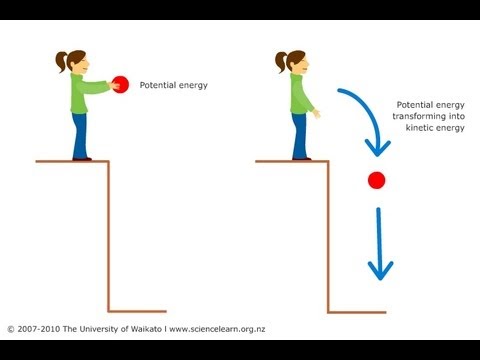
Energy is the ability to do "work". It is measured in something called joules. One joule is equal to the force of one newton acting through a distance of one meter. Kinetic energy is energy an object has due to its motion. For example, if a ball is dropping down like shown in the picture. The ball is in motion and the energy is kinetic. Potential energy is energy that is being stored and waiting to be used. When an object begins to move, the potential energy stored in that object becomes kinetic energy. There are different kinds of potential energy including gravitational, elastic, and chemical potential energy.


SP4 - Analyzing and interpreting data

I analyzed data when I completed several online interactives that taught me about newtons laws as well as energy. While completing the games and activities, I collected and recored the data I found in a graph on either a paper or google document. Once I completed the tables, I interpreted the data and made conclusions on my findings. In one game, I collected data on the amount of energy produced based on the speed an object is being launched at and its mass. After creating a table, I analyzed it and saw that the higher the speed and mass of an object, the higher amounts of energy would be produced.


XCC: Energy and Matter

When you are throwing an object, the speed of the launch and mass of the object will directly affect the amount of energy produced. If you throw the same ball at different speeds, the amount of energy produced will change. The higher the speed the more energy. The same thing happens when you throw different balls with different masses and different amounts of matter at the same speed. The heavier the ball, the more energy produced. This is one example of the relationship and system between mass and matter, speed, and energy.